Customer loyalty program software replaces paper punch cards, manual spreadsheets and guesswork with a single platform that manages digital loyalty cards, tracks every visit and automates the messages that bring people back. For local businesses — cafés, salons, barbers, restaurants, gyms — it is one of the most cost-effective tools for turning one-time visitors into regulars.
This guide covers what customer loyalty program software actually does, which features matter most for a small or mid-size business, how to evaluate pricing, and how to get a program running without a developer or a big budget.
What Is Customer Loyalty Program Software?
Customer loyalty program software is a category of tools that lets businesses create, manage and measure a digital loyalty program from one dashboard. Instead of handing out paper cards that get lost or forgotten, the software issues digital cards that customers carry in Apple Wallet, Google Wallet or as a web app on their phone.
At its core, customer loyalty program software handles three jobs:
- Card management — creating the loyalty cards, deciding the reward rules, and customizing the design so it matches your brand.
- Customer tracking — logging every visit, stamp, point or purchase in a built-in CRM so you know who your regulars are, who is drifting away, and who just walked in for the first time.
- Automated engagement — sending PUSH notifications, SMS messages or emails at the right moment to bring customers back without manual effort.
The shift from paper to digital is not just about convenience. A digital card cannot be lost, faked or left at home. And because every scan creates a data point, you get analytics that a paper card could never provide — visit frequency, redemption rates, time between visits, and customer segments you can act on.
Why Local Businesses Need Customer Loyalty Program Software
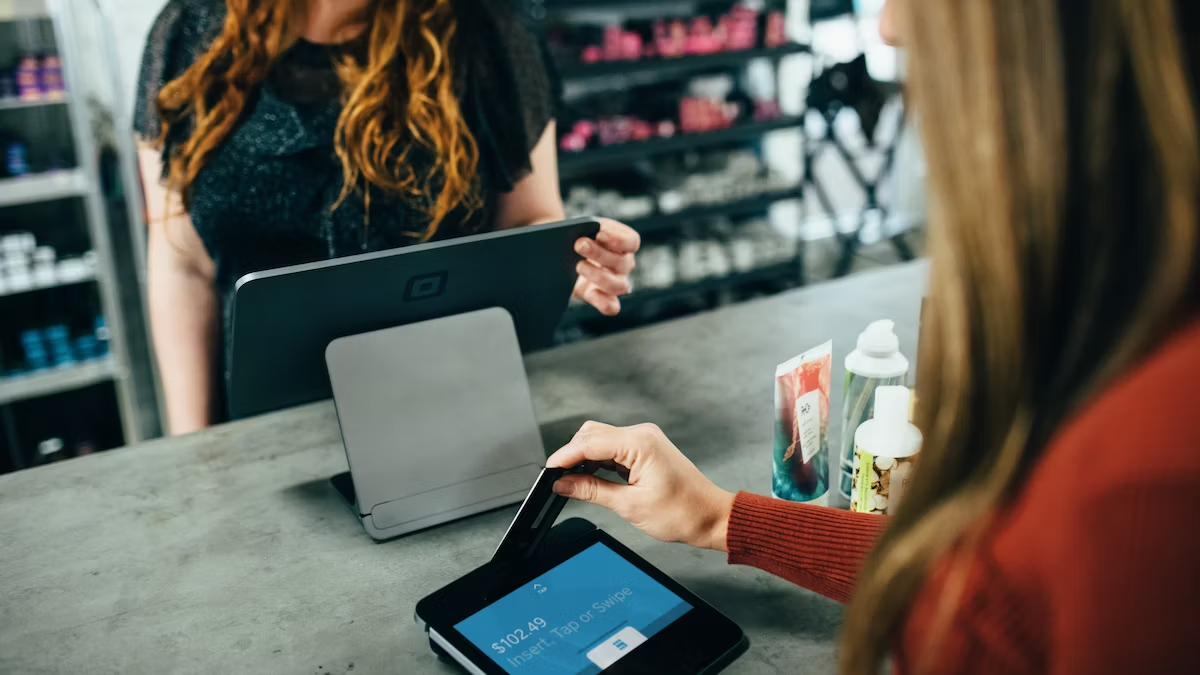
Acquiring a new customer costs five to twenty-five times more than retaining an existing one. Customer loyalty program software tips the balance toward retention by giving you a structured, measurable way to reward repeat business.
It replaces a process most businesses run badly
Many cafés and salons already have some version of a loyalty scheme — usually a paper stamp card or an informal "buy ten, get one free" deal. The problem is not the idea. The problem is execution: cards go missing, staff forget to stamp, there is no record of who redeemed what, and there is no way to follow up with a customer who stops showing up. Customer loyalty program software fixes all of these gaps in one move.
It creates a direct channel to the customer
When a customer adds a digital loyalty card to their phone, you gain a direct communication channel. PUSH notifications land on the lock screen — no email filter, no social-media algorithm, no ad spend. That reach is the real asset, and it compounds over time as your enrolled base grows.
It turns data into decisions
A customer retention program without data is just a giveaway. Software that tracks visits, segments customers by behavior, and reports on redemption rates lets you see what is working and what is not. You can identify your top 10% of customers, find people who haven't visited in 30 days, and test different reward thresholds — all from the same dashboard.
Core Features to Look for in Customer Loyalty Program Software
Not every platform offers the same depth. Here are the features that matter most for a local business, and how they translate into daily operations.
Multiple Card Formats
A stamp card is the most familiar format, but it is not the only one that drives retention. The best customer loyalty program software supports several card types so you can run different programs for different goals:
- Stamp cards — buy 9, get 1 free. The classic, ideal for coffee shops and quick-service restaurants.
- Reward and points cards — customers earn points per visit or per spend, then redeem them for a reward from a catalog.
- Membership cards — recurring access for gyms, studios and clubs.
- Cashback and discount cards — a percentage back on every purchase, stored on the card.
- Coupons, multipasses and gift cards — acquisition-oriented formats that drive first visits or gifting.
Running several formats at once lets you address both retention (stamp, reward, membership) and acquisition (coupon, gift, multipass) from the same platform.
Apple Wallet and Google Wallet Integration
A loyalty card that sits inside Apple Wallet or Google Wallet is the one customers actually use. They do not need to download a separate app, remember a login, or search for a QR code — the card is right next to their boarding passes and payment cards. Look for software that issues native wallet passes and updates them in real time after every scan.
PUSH Notifications and Automated Messaging
Unlimited PUSH notifications — including geo-targeted PUSH that fires when a customer walks near your location — are what separate serious customer loyalty program software from a basic card maker. Combined with SMS, email and social messaging (WhatsApp, Messenger, Telegram), you can reach customers on whatever channel they prefer.
Automated triggers matter too. A well-configured system sends a message when a card is almost full, when a customer hasn't visited in a set number of days, or when a promotion launches — without you writing a single message each time.
Built-In CRM and Customer Segmentation
Customer loyalty program software should include a CRM that logs every interaction automatically. Customer segmentation — grouping customers by visit frequency, card type, location, or custom fields — lets you send targeted campaigns instead of blasting the same message to everyone. A segment of "visited 5+ times in the last 90 days" is your VIP list; a segment of "no visit in 60 days" is your win-back list.
Analytics and Feedback
Real-time dashboards that show cards issued, visits logged, rewards redeemed, and PUSH open rates give you a clear picture of program health. Feedback and survey tools built into the platform let you capture sentiment at the moment of the visit, not weeks later.
A Scanner App That Works on Any Phone
Staff need to stamp or scan cards quickly without specialized hardware. A free scanner app that runs on any smartphone or tablet keeps the process fast, and a Kiosk Mode option lets customers scan their own cards on a wall-mounted device for high-volume environments.
How Customer Loyalty Program Software Works in Practice
The day-to-day flow is simpler than most business owners expect:
- Design the card — choose a format (stamp, reward, membership, etc.), set the reward rule, customize the colors and logo using a card designer with 100+ templates.
- Enroll customers — customers scan a QR code at the counter, on a table tent, or from print-ready materials. The card adds itself to Apple Wallet or Google Wallet in one tap.
- Stamp on every visit — staff open the scanner app on their phone and scan the customer's card. The stamp, point or visit logs automatically.
- Automated follow-up — the software sends PUSH notifications based on rules you set. A customer two stamps away from a free coffee gets a nudge; a regular who hasn't been in for three weeks gets a "we miss you" message.
- Review and adjust — the analytics dashboard shows which cards are driving repeat visits and which messages get opened, so you can refine the program over time.
For businesses that want a hands-off scanning experience, Kiosk Mode lets customers scan their own card on a tablet left at the counter. The scan action fires automatically, then resets for the next customer — no staff intervention needed for standard stamp and visit actions.
How to Evaluate Pricing for Customer Loyalty Program Software
Pricing for customer loyalty program software varies widely. Some platforms charge per customer, which gets expensive as your list grows. Others charge a flat monthly fee based on locations and features, which is more predictable.
Key questions to ask before signing up:
- Is there a per-customer or per-message fee? Unlimited customers, visits and messages on every plan means the cost does not scale with your success.
- How many locations does the plan cover? A single-location café has different needs than a three-branch salon.
- Is there a free trial? A 14-day trial with no credit card required lets you test the platform with real customers before committing.
- What's included vs. add-on? Features like the CRM, scanner app, card designer, PUSH notifications and analytics should be included, not upsold.
As a benchmark, plans for customer loyalty program software aimed at local businesses typically start around $12–17/month for a single location and scale to $24–98/month for multi-location businesses that need more promotions and team seats. Enterprise pricing is usually custom. You can compare current plan details on our pricing page.
Integrations: Connecting Loyalty to Your Existing Stack
Customer loyalty program software works best when it connects to the tools you already use. For local businesses, the most relevant integrations are POS systems — when a sale goes through the register, the customer's loyalty card should update automatically.
Common POS integrations to look for include Square, Shopify POS and Lightspeed Retail (X-Series). If your POS is not on the ready-made list, an API with webhooks lets you build a custom connection.
Note that not every integration is available on every pricing tier. API and webhook access, for example, is typically a premium feature. Before choosing a plan, check whether the integration you need is included at that tier or requires an upgrade.
Common Mistakes When Choosing Customer Loyalty Program Software
Picking a platform that charges per customer
If your enrolled base grows from 500 to 5,000 — which is the goal — a per-customer fee turns success into a cost problem. Flat-rate plans that include unlimited customers are more sustainable for growing businesses.
Ignoring the wallet experience
A loyalty app that requires a separate download has a higher barrier to entry than a card that drops straight into Apple Wallet or Google Wallet. The easier it is for a customer to carry the card, the more likely they are to use it.
Overcomplicating the reward structure
The most effective loyalty programs for local businesses are simple: visit, earn, redeem. A stamp card with a clear reward after 8 or 10 visits consistently outperforms convoluted tier systems for businesses with high visit frequency.
Skipping the automated messaging
A loyalty card without automated PUSH or SMS follow-up is a passive tool. The card collects data, but it does not actively bring customers back. Make sure your customer loyalty program software includes automated messaging triggers, not just manual send.
Getting Started: A Quick Checklist
If you are evaluating customer loyalty program software for your business, here is a practical starting checklist:
- Define the goal — are you rewarding repeat visits, increasing average spend, reactivating lapsed customers, or all three?
- Pick the card format — a stamp card for visit-based rewards, a points card for spend-based rewards, or a membership card for recurring access.
- Set one simple reward — one clear reward at an achievable threshold. You can add complexity later.
- Prepare enrollment materials — a QR code at the register, a table tent, or a link on your website.
- Configure one automated message — a PUSH notification when the card is almost full, or a win-back message after 30 days of inactivity.
- Review analytics weekly — check cards issued, visits logged and rewards redeemed to see if the program is gaining traction.
Most businesses can go from zero to a running loyalty program in under an hour with the right customer loyalty program software. Start a free 14-day trial to see how it works with your own customers — no credit card required.