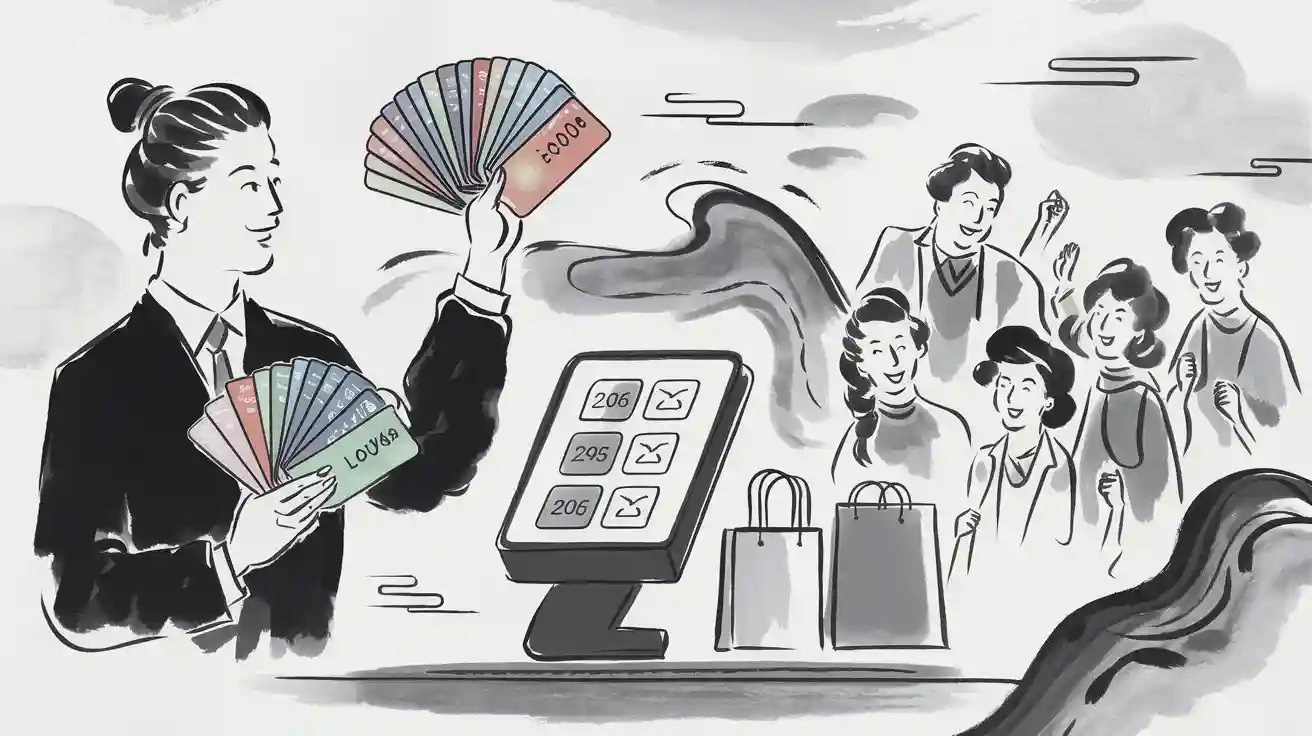
A loyalty card system is the mechanism that tracks customer visits, records purchases, and triggers rewards without you needing to remember who came in yesterday. For cafes, salons, barbers, restaurants, and gyms, it replaces loose paper cards with a structured loop: the customer buys, the system logs the visit, and a reward pulls them back for the next one.
The difference between a system that works and one that collects dust is in the details. This guide breaks down what to compare, which features actually matter for a small business, and how to go from zero to a working card program in a single day.
What a loyalty card system does for a small business
At the most basic level, a loyalty card system gives customers a reason to return. They earn something for buying, and that accumulation creates a pull toward the next visit.
But the real value is on your side of the counter. A working system captures data you never had before: which customers visit weekly, which disappeared three weeks ago, and which are one stamp away from a free item. That data turns loyalty from a guessing game into a process you can manage.
The economics back this up. Research from Bain & Company, published through Harvard Business Review, found that increasing customer retention by just 5% can increase profits by 25% to 95%. A separate study from the Spiegel Research Center at Northwestern University found that rewards program members increased their spending by about 20% after joining.
A loyalty card system makes those numbers practical for a single-location business. You do not need a marketing department. You need a card that sits in your customer's phone and a notification that pulls them back when they have not visited in a while.
Paper cards vs digital: why the format matters
Paper punch cards are familiar. They cost almost nothing to print and they are easy to hand to a customer. But they have structural problems that compound over time.
Cards get lost, left in jacket pockets, and thrown out by accident. When a customer loses a card at eight stamps out of ten, they do not start over. They leave. You have earned the repeat visits but lost the reward cycle right before it paid off.
Paper also gives you zero data. You cannot tell who holds an active card, how many are in circulation, or which customers stopped coming. And once a customer walks out the door, you have no way to reach them until they decide to come back on their own.
Digital loyalty cards fix all of this. They live in Apple Wallet or Google Wallet on the customer's phone. There is nothing to carry and nothing to lose. Staff scan a code to stamp the card, and the system handles the rest.
The bigger difference is what happens between visits. A digital loyalty card system can send a push notification to a customer who has not been in for two weeks. It can alert someone that their reward is ready to redeem. These small nudges close the gap between thinking about coming back and actually walking through the door.
For a side-by-side breakdown of the two formats, see digital loyalty cards vs paper punch cards.
Features to look for in a loyalty card system
Not every feature on a marketing page matters for a small business. Here is what actually drives retention and saves time day to day.
Card formats that match your business. Different businesses need different mechanics. A cafe does well with stamp cards. A gym needs membership passes. A salon might prefer cashback or discount cards. The best systems support multiple formats so you can run the right one for each type of promotion. Loyally.ai includes all eight card formats on every plan: stamp, reward, membership, discount, cashback, coupon, multipass, and gift cards. You can run several at once without upgrading.
Wallet integration. If the card does not live in Apple Wallet or Google Wallet, most customers will not keep it. A wallet pass is always on the lock screen or in the wallet app. No separate app to install, no login to remember. This alone drives higher participation than any other single feature.
Push notifications. The ability to reach a customer after they leave your shop is what separates a loyalty card system from a coupon taped to the register. Push notifications remind lapsed customers, announce new offers, and bring back people who are close to a reward. Look for a system that includes unlimited push notifications instead of one that charges per message. Geo-push lets you trigger a notification when a customer walks near your location.
Built-in CRM and segmentation. Knowing that someone visited is not enough on its own. You want to group customers by visit frequency, last visit date, or reward progress and then send targeted messages instead of blasting everyone with the same offer. Customer segmentation turns a generic program into a personal one.
Marketing channels beyond push. Push notifications are one channel. A good loyalty card system also sends SMS, email, and messages through WhatsApp, Messenger, or Telegram so you reach customers however they prefer to hear from you.
Analytics and reporting. You should be able to see enrollment rates, visit frequency, reward redemptions, and which campaigns actually brought people back. Without these numbers, you are guessing at what works and what does not.
Self-service scanning. Some systems let you set up a tablet at the counter where customers scan their own card. This is useful during busy periods or for businesses that do not always have someone at the register. Loyally.ai calls this Kiosk Mode, and it runs on any phone or tablet left at the counter.
POS integration. If you already use a point-of-sale system, check whether the loyalty card system connects to it. When purchases credit the card automatically, you remove an extra step from the checkout flow and reduce missed stamps.
For guidance on what to put on your card itself, see how to create effective loyalty cards for your small business.
How to evaluate and set up your loyalty card system
Picking a system does not have to take weeks. Here is a practical process that gets you from comparison to launch quickly.
Start with your goal. What do you want the card to do? Bring back lapsed customers? Increase average spending? Reward your most consistent regulars? Write down the specific outcome you are after. Everything else follows from that goal.
Match the card format to the goal. If you want more frequent visits, a stamp card works well. If you want higher spending per visit, cashback or a points-based reward card makes more sense. If you run a gym or studio, a membership or multipass card tracks entries without manual counting.
Check what is included, not just what is advertised. Some platforms charge extra for push notifications, analytics, or additional card designs. Others lock core features behind higher-priced tiers. Look at what the base plan actually includes before comparing headline prices.
Loyally.ai includes unlimited customers, cards, push notifications, SMS, email, and all eight card formats on every plan. The Starter plan is $12 per month billed yearly or $17 per month billed monthly. Growth adds more locations and manager seats at $24 per month billed yearly. See the full breakdown on the pricing page.
Run a trial before committing. Most digital loyalty card systems offer a free trial period. Use it to create a card, test the scanning process with your staff, and send a test notification. Fourteen days is usually enough to see whether the workflow fits your shop. If it feels clunky during the trial, it will not get easier once you are live with real customers.
Launch small, then expand. Start with one card type and one promotion. Tell your first few regulars about it. Watch how they interact with the card, what questions they ask, and where they get stuck. Then adjust the reward threshold, the notification timing, or the card design before promoting it to everyone.
Use the data once you have it. After a month of visits logged, look at your analytics. Which customers come weekly? Who dropped off? Who is one visit away from earning a reward? Send a targeted push to lapsed customers and a thank-you message to regulars. This is where a loyalty card system starts paying for itself, because you are acting on real behavior instead of assumptions.
If you are still deciding why your shop needs a card program at all, that guide covers the business case in detail.
Frequently asked questions
What is a loyalty card system?
A loyalty card system tracks customer visits or purchases and rewards repeat behavior. It can be as simple as a stamp card or as flexible as a cashback or membership pass. Digital versions live in Apple Wallet or Google Wallet, so customers carry their card on their phone and staff scan a QR code or barcode to record each visit.
How much does a loyalty card system cost?
Prices vary by provider and plan. Loyally.ai starts at $12 per month billed yearly for one location with unlimited customers, cards, and push notifications. Growth and Premium plans add more locations, manager seats, and advanced features. Every plan includes a 14-day free trial with no credit card required. You can compare plans on the pricing page.
Can a loyalty card system work with Apple Wallet and Google Wallet?
Yes. Digital loyalty card systems generate a wallet pass that customers add to their phone with a single tap. The pass carries a QR code or barcode that staff scan with the scanner app or a web scanner to record the visit. Customers do not need to install a separate app.
Do I need technical skills to set up a loyalty card system?
No. Most digital platforms let you create a card from a template, customize the design, and share a sign-up link within minutes. Loyally.ai has over 100 card templates and a visual card designer that requires no coding or design skills. See the full feature list for what is included on every plan.
Can customers scan their own card without staff help?
Yes. Systems with a kiosk or self-service mode let you leave a phone or tablet at the counter. Each customer holds up their own card, the scanner reads the QR code, and the stamp or credit happens automatically before resetting for the next person. This works well during rushes or at unattended entry points like gym doors.